

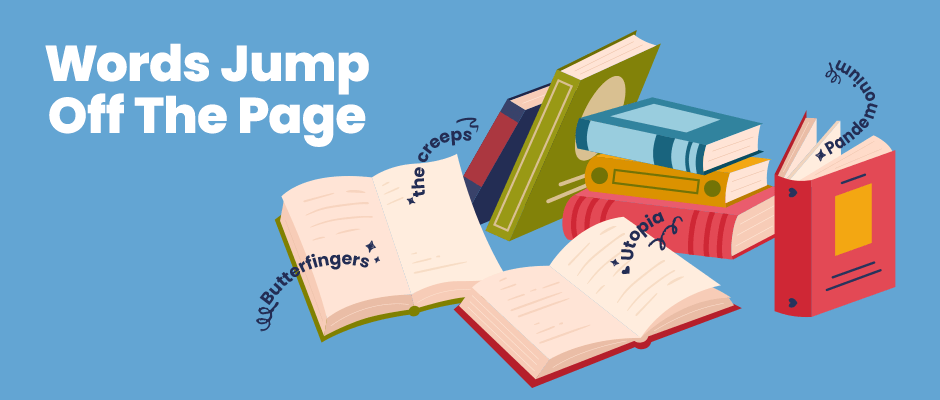
Some of our more colourful vocabulary comes straight from the pages of fiction. We can thank prolific author Charles Dickens for introducing in his novels the following words, which are still in common use: butterfingers, someone who drops things; abuzz, alive with noise and activity; the creeps, a shiver of horror; devil-may-care, of a cheerfully reckless attitude; flummox, to greatly bewilder and sawbones, slang for a surgeon.
Pandemonium, which we use to mean ‘wild, noisy disorder’ was coined by poet John Milton in his poem Paradise Lost, in which Pandemonium is the capital of Hell. Sci-fi writer Karel Čapek invented robot, from the Czech robotnik ‘slave’. Thomas More invented the perfect country Utopia, from the Latin word for ‘nowhere’, because he knew it would never exist. The opposite is dystopia, ‘a bad place’.
The names of fictitious characters have also turned into words. A miserly person is a scrooge, after Dickens’ Ebenezer Scrooge in A Christmas Carol. Quixotic, meaning ‘extremely idealistic but impractical’, comes from the name of the hero of Cervantes’ novel, elderly knight Don Quixote.
Playwright Richard Brinsley Sheridan invented the character Mrs Malaprop, who loved using long words, which she often used incorrectly. She would say ‘he’s the very pineapple of politeness’ instead of ‘the pinnacle of politeness’. This is where our word malapropism comes from, meaning a word wrongly used. And Mrs Malaprop wasn’t the only one to misuse words. We all do it sometimes.
Boxer Mike Tyson, when asked what he’d do when he retired, famously made the prediction: “I guess I’m going to fade into Bolivian”. Politicians are not immune to malapropisms. When Tony Abbott was Australia’s opposition leader, he announced: “No one, however smart, however well-educated, however experienced, is the suppository of all wisdom”.
Happy Puzzling!

Recent Comments